In today’s fast-paced world, resilience and teamwork are more valuable than ever, whether at home, in school, or in the workplace. These qualities can’t be developed through lectures or screens alone; they need to be lived, felt, and earned. Outdoor challenges such as treetop obstacle courses, ziplines, and group problem-solving tasks provide the perfect environment to face fears, build confidence, and grow together.
At Forest Adventure, Singapore’s largest treetop adventure park, every climb, leap, and zip line is designed with purpose, where fun meets growth and every challenge becomes a meaningful lesson in resilience and team spirit.
Key Takeaways
- How do outdoor challenges build resilience?By encouraging participants to face fears, adapt to setbacks, and persist through difficulty, they cultivate determination and confidence that extend into daily life.
- Why are outdoor challenges effective for team spirit?Shared obstacles and triumphs strengthen trust, communication, and unity all of which are essential foundations of lasting teamwork.
- What skills can be developed through obstacle courses and ziplines?Participants sharpen focus, coordination, and creative problem-solving while building courage and mutual support.
- How does science support the benefits of outdoor challenges?Psychological research shows that controlled stress, positive reinforcement, and experiential learning enhance both resilience and collaboration.
- Why are outdoor challenges valuable for students and professionals alike?They translate lessons from the treetops such as leadership, empathy, and teamwork, into the classroom and workplace.
- What lasting benefits do outdoor challenges provide?Improved communication, stronger confidence, and a growth mindset that helps individuals embrace challenges throughout life.
Outdoor Challenges Are Powerful Tools for Growth

2.1 How Do Outdoor Challenges Build Resilience in Everyday Life?
Resilience is the ability to bounce back from setbacks, and outdoor challenges provide a safe yet meaningful space to practise it. Whether it’s slipping off a rope bridge or pausing before a zipline, participants quickly learn that failure isn’t final; it’s part of the journey.
Each retry after a missed attempt strengthens determination and perseverance. These moments mirror the frustrations we face in daily life, from school exams to workplace stress. By overcoming both physical and mental barriers, outdoor challenges build self-belief and confidence that extend far beyond the park.
Through every leap, climb, and landing, participants discover that resilience grows not from perfection, but from persistence, a lesson that stays with them long after the harness comes off.
2.2 How Do Outdoor Challenges Strengthen Team Spirit Beyond the Classroom or Office?
Team spirit isn’t built through theory; it’s forged through shared experience. Outdoor challenges create the ideal environment for that transformation. Navigating a treetop obstacle or cheering on a nervous teammate requires trust, communication, and empathy.
These moments remind us that success is rarely achieved alone. Completing a tough course or celebrating a teammate’s courage on the zipline sparks a collective sense of pride and unity. The camaraderie formed through each outdoor team building activity strengthens bonds that carry into classrooms, offices, and family life alike.
By supporting one another through fear and uncertainty, participants cultivate genuine respect and teamwork, the kind that turns groups into communities and challenges into shared victories. These shared team bonding activities in Singapore turn ordinary experiences into meaningful growth moments.
Outdoor Challenges Come in Many Forms
3.1 How Do Obstacle Courses in Nature Build Problem-Solving Skills?

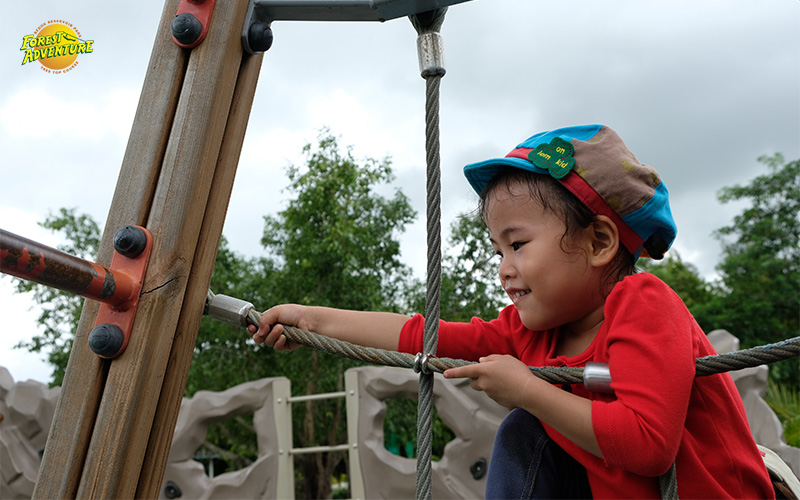
Nature-based obstacle courses are more than physical tests; they challenge both the body and the mind. Balance beams, swinging bridges, and rope climbs place participants in dynamic situations where focus, coordination, and adaptability are key.
Each task within these outdoor challenges demands quick thinking and strategic movement. When faced with an unsteady bridge or a tricky rope transition, participants must adjust their approach in real time. These outdoor problem-solving experiences sharpen focus and creative thinking that extend beyond the treetops.
Learning to navigate uncertainty outdoors nurtures a calm and creative mindset, one that helps individuals handle complex challenges at school, work, or home with the same sense of focus and determination. This obstacle course in Singapore challenges both body and mind through nature-inspired design.
3.2 Why Do Zipline Adventures Strengthen Trust and Team Connection?

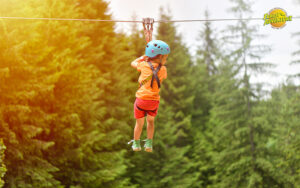
Ziplines offer one of the most transformative outdoor challenges, pushing participants to confront their fears while building trust in the equipment, the facilitators, and themselves. For many, overcoming their fear of heights becomes a defining moment of courage.
Stepping off the platform requires courage and faith, but that single moment of letting go often becomes a lasting lesson in confidence.
At Forest Adventure, soaring across the 300-metre zipline above Bedok Reservoir creates a shared adrenaline rush like no other. Teams cheer, laugh, and celebrate together, forming connections built on shared triumph.
Courage is contagious. Watching one participant conquer their nerves often inspires others to follow, creating a ripple effect of bravery that strengthens group unity and trust. In every shared thrill, there’s a deeper sense of connection and mutual support.
3.3 How Do Group-Based Adventure Tasks Encourage Strategy and Leadership?

Group-based outdoor challenges go far beyond individual feats of strength or endurance. They demand communication, planning, and a shared sense of purpose. Relay-style activities or timed team courses test not just physical speed but cooperation and strategy.
Success depends on pacing, trust, and ensuring that everyone, from the strongest to the most hesitant, moves forward together. Decisions such as who leads, who supports, and how the team adapts to setbacks mirror real-world leadership dynamics.
As participants rotate roles, they experience both leading and following, learning that effective teamwork isn’t about who’s in charge; it’s about working as one. These collective experiences forge empathy, accountability, and leadership that naturally extend into everyday environments.
Science Explains Why Outdoor Challenges Build Resilience and Team Spirit
4.1 What Does Psychology Tell Us About Outdoor Challenges?
The psychological benefits of outdoor challenges reach far beyond excitement or adrenaline. Psychologists highlight that encountering small, manageable stresses in a safe environment helps individuals build emotional endurance for future challenges. For instance, crossing a high rope bridge under professional supervision introduces just enough tension to teach coping and regulation skills, a form of resilience training through adventure.
Later, when facing real-world pressures, from school exams to work presentations, participants can draw on these same strategies to stay calm and composed.
Science also explains why the sense of achievement feels so rewarding. When a participant conquers fear, such as taking that first step off the zipline platform, the brain releases dopamine, a chemical that reinforces confidence and positive memory formation. This is why the sense of unity and accomplishment built through outdoor challenges often stays with participants long after the activity ends.
4.2 How Do Outdoor Challenges Shape Learning and Work Environments?
Outdoor challenges don’t just build individual resilience; they transform the way people learn and work together. In schools, experiential learning, also known as learning by doing, has been shown to strengthen leadership, communication, and empathy. When students collaborate to solve problems outdoors, they practise teamwork, decision-making, and peer support, all while developing confidence in their own abilities.
In the corporate world, many organisations integrate outdoor challenges and corporate team building exercises into their development frameworks. Research and case studies reveal that shared physical tasks help dissolve workplace hierarchies and create a sense of equality. Employees who have climbed, balanced, or strategised together return to the office with renewed trust, stronger connections, and a greater willingness to collaborate.
By combining adventure with psychology, these experiences provide a proven pathway to resilience and team cohesion, whether in classrooms, boardrooms, or treetops.
Forest Adventure Turns Outdoor Challenges Into Real-Life Lessons
5.1 What Makes Forest Adventure Singapore’s Largest Treetop Adventure Park?
Forest Adventure isn’t just another recreational venue; it’s Singapore’s largest treetop adventure park designed to bring people closer through meaningful outdoor challenges. With dedicated courses for kids, juniors, and adults, the park ensures that every participant faces the right level of excitement and growth.
Younger children build courage as they navigate smaller obstacles, while adults challenge themselves on higher, more complex elements that test both focus and resolve. The park’s crown jewel, a breathtaking 300-metre zipline across Bedok Reservoir, offers a once-in-a-lifetime experience that blends thrill with accomplishment. Gliding over open water creates an unforgettable sense of triumph, turning each crossing into a shared story of courage and joy.
As the premier treetop adventure in Singapore, Forest Adventure delivers thrill and growth in equal measure.
5.2 How Does Forest Adventure Enrich School Experiences?
For schools, Forest Adventure transforms lessons about teamwork and leadership into lived experiences. The park’s outdoor challenges invite students to step out of their comfort zones and put theory into action.
Whether balancing on ropes, tackling obstacles, or supporting peers through moments of hesitation, students learn the power of encouragement, empathy, and cooperation. These adventures help them overcome fears, discover personal strengths, and develop a deeper sense of mutual trust. Forest Adventure also supports student leadership development by creating opportunities for pupils to take initiative and guide their peers.
Back in the classroom, these shared experiences often translate into stronger friendships and improved collaboration among peers, a testament to learning that lasts far beyond the school gates.
5.3 Why Is Forest Adventure Valuable for Corporate Teams?
Corporate teams across Singapore turn to Forest Adventure for a refreshing approach to professional development. Unlike indoor seminars or predictable workshops, the park immerses colleagues in outdoor challenges that demand communication, coordination, and creativity.
Scaling obstacles, cheering teammates, and celebrating shared milestones bring lessons of trust, resilience, and leadership to life. These experiences mirror real workplace dynamics, where success depends on understanding, adaptability, and teamwork.
Companies use these corporate team building exercises and outdoor activities for team building to strengthen collaboration beyond the office. After a day in the treetops, teams return to the office with renewed energy, stronger bonds, and a more collaborative mindset, proving that sometimes, the best way to grow together is to climb together.
Outdoor Challenges Provide Lasting Benefits Beyond the Course

6.1 How Do Outdoor Challenges Improve Communication?
Communication lies at the heart of every great adventure, and outdoor challenges offer the perfect platform to develop it. Clear, supportive communication is essential when navigating treetop obstacles as the lessons learned often carry over into everyday life.
Families Parents and children learn to encourage one another, listen actively, and celebrate small victories together. These shared successes strengthen bonds and nurture trust at home through family outdoor activities.
Classrooms Students practise giving clear instructions, offering feedback, and working respectfully as a team. These experiences build collaboration and empathy, skills that enhance group projects and peer relationships.
Offices Colleagues learn to communicate under pressure, fostering patience, understanding, and alignment on shared goals. The result is a workplace culture built on trust and teamwork.
6.2 Why Do Outdoor Challenges Boost Self-Confidence and Problem-Solving Skills?
Every obstacle presents a moment of choice: to try, to adapt, and to persevere. Outdoor challenges cultivate courage and creativity through lived experience.
Overcoming fears Whether it’s climbing a rope bridge or stepping off the zipline, each success provides undeniable proof of one’s own capability. These confidence building outdoor activities turn uncertainty into confidence.
Thinking on the spot Obstacles are puzzles in motion. Balancing, timing, or choosing the best route strengthens critical thinking and resourcefulness. The ability to adapt quickly outdoors translates into sharper problem-solving at school, at work, and in daily life.
Confidence that lasts Every completed course or conquered hesitation adds to a personal reservoir of achievement, a reminder that perseverance leads to progress.
6.3 How Do Outdoor Challenges Encourage Taking Calculated Risks?
Growth often begins at the edge of comfort, and outdoor challenges provide a safe yet stimulating space to explore that edge.
Understanding limits Participants discover how far they can push themselves while staying within safe boundaries, learning to balance confidence with caution.
Calculated bravery Deciding to take on a difficult obstacle or glide across the zipline involves assessing risk and reward, the same decision-making process used in life’s bigger moments, from school choices to career moves.
Growth mindset Experiencing the rewards of taking thoughtful risks outdoors encourages participants to embrace new opportunities elsewhere with optimism and resilience.
Through these lessons, outdoor challenges become more than just thrilling activities; they become stepping stones for lifelong growth.
Through these lessons, outdoor challenges become more than just thrilling activities, they become stepping stones for lifelong growth.
Conclusion
Outdoor challenges are more than just recreational thrills; they’re powerful experiences that teach resilience, strengthen bonds, and inspire growth. Individuals learn to bounce back from setbacks, while teams forge trust and unity through shared achievements. From families discovering new ways to connect, to students building confidence, and corporate teams enhancing collaboration, every group leaves with lessons that last long after the adventure ends.
Ready to turn learning into action? Take on the treetop obstacles and experience the iconic 300-metre zipline at Forest Adventure. Book your adventure today and discover how outdoor challenges can bring your group closer together.
FAQ
Are outdoor challenges suitable for people who are afraid of heights?
Yes. Many participants start with some level of fear, especially when faced with treetop obstacles or ziplines. Forest Adventure’s courses are designed with progressive difficulty levels, allowing individuals to build confidence gradually while being supported by safety harnesses and trained instructors.
Can corporate teams really apply what they learn on the course back at work?
Absolutely. The teamwork, trust, and problem-solving practised during outdoor challenges directly translate to the workplace. Companies often find that colleagues return with stronger communication, improved collaboration, and a greater sense of camaraderie.
What should participants wear or bring for outdoor challenges?
Comfortable activewear and closed-toe sports shoes are recommended for safety and ease of movement. Participants should also bring a water bottle, sunscreen, and insect repellent. All safety equipment, such as harnesses and helmets, will be provided by Forest Adventure.